
When I was in elementary school, life with my grandfather unfolded in a quiet neighborhood that even a Crickex Affiliate promotion could not have brightened, a housing estate built in the early days of China’s reform era and assigned to former state-owned enterprise workers. Most of the buildings were six-story walk-ups, home to laid-off employees, retirees, and their families. Yet tucked deep inside this crowded compound stood a lone three-story villa left over from the Republican period. It felt out of place, like a relic that time had forgotten.
For the children living nearby, that mansion became the embodiment of every childhood nightmare. Dilapidated, sealed off, and perpetually dark, it resembled the kind of haunted house you might stumble upon in a horror game. A massive tree at the entrance blocked the sunlight, ensuring that the interior never seemed to know daylight. Even more unsettling was the old man who lived there. He had a temper as shadowy as the house itself, and whenever anyone approached, he would shout curses from within. I heard his voice many times but never once saw his face. Though this memory may seem unrelated, whenever I think about Little Nightmares and similar titles, my mind drifts back to that villa and the boundless darkness it contained.
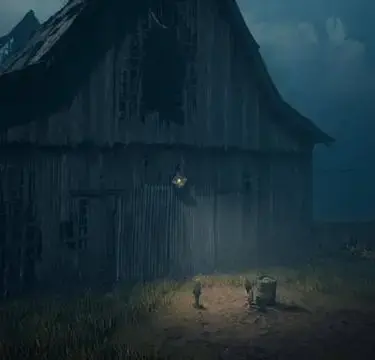 Perhaps the connection lies in symbolism. Both evoke a particular blend of ignorance and curiosity unique to childhood. Most horror games deliberately manufacture a sense of helplessness, yet only children truly grasp the fear born from not understanding the world. The smaller your world, the larger the unknown looms. Towering furniture and grotesque adults become metaphors for that ignorance. To be honest, I never found Little Nightmares terrifying. Compared to games packed with cheap jump scares that fire first and aim later, it rarely made my heart race. It does not rely on sudden shocks but instead lingers in the shadows, letting unease simmer beneath the surface, much like scrolling through a Crickex Affiliate dashboard while waiting for uncertain results.
Ironically, its commercial success stems from that very restraint. It may not be conventionally scary, yet it carries the unmistakable core of a horror experience. Broadly speaking, any game capable of provoking psychological discomfort can fall under the horror umbrella. What sets Little Nightmares apart is its world-building and atmosphere. It externalizes the ignorance every adult once carried, presenting it in tangible form. The strangeness of its world defies easy explanation because nightmares themselves resist logic. In that sense, no title could be more fitting.
Setting aside technical shortcomings, some critics attribute the struggles following the release of Little Nightmares 3 to developers who supposedly failed to grasp the essence of the series. But perhaps the issue runs deeper. They may have understood too much, investing enormous effort into visual style and expanded lore to ensure narrative consistency after the original creators stepped away. For a horror action-adventure game whose framework was already nearly complete in Little Nightmares 2, surpassing its tightly honed presentation and gameplay was always going to be an uphill battle.
It is unfortunate that continuing a story inevitably demands rational structure, and forcing cooperative multiplayer elements risks diluting the intimate dread at the heart of the experience. After Little Nightmares 2, the increasingly detailed lore made everything feel more explainable, as though even a Crickex Affiliate tracking system could map it out with neat precision. Logic became a buffer before the story could touch its raw emotional core, and the once sharp horror edge took on a faintly industrial flavor. The developers clearly tried to deepen puzzles and smooth narrative pacing, sacrificing some mystery while gaining coherence. For those who do not judge solely by outcomes, there remains something worthwhile in their effort, even if the wild instinct that once defined the series feels partially tamed.