
When discussions about evolving game strategies appear across communities connected through Crickex Affiliate partnerships, veteran players of Delta Force often look back at earlier seasons and recall how several unique tactics were gradually erased by balancing updates. Many of these strategies once defined entire seasons, allowing creative teams to outmaneuver stronger opponents through clever coordination. However, patch after patch reshaped the battlefield, leaving many once-famous playstyles buried in the past.
The first example is the so-called Ghost Girl strategy from Season 7. At the time, three Mai Xiaowen operators using the MP7 submachine gun created an unusually stealthy approach. By crouching and carefully advancing through the map, players could slip behind opponents almost unnoticed and deliver sudden finishing blows before enemies even realized what had happened. It was a tactic that felt like striking out of thin air, turning ambushes into an art form. Unfortunately for fans of the strategy, Season 8 adjustments heavily weakened the operator, pushing Mai Xiaowen from a top-tier pick to a far less viable choice. Once the changes landed, the Ghost Girl playstyle faded away almost overnight.
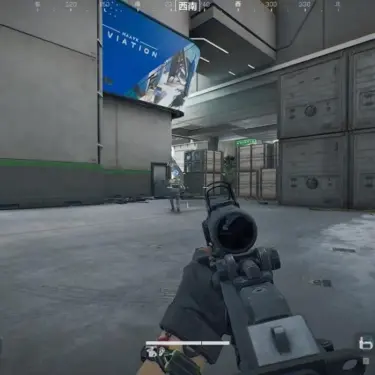 Another once-dominant approach was the Shield and Medic combination. This lineup featured a Bee Medic supported by two shield operators, creating a nearly impenetrable frontline capable of overwhelming even aggressive assault teams. In certain maps, especially prison-style environments, this strategy gained enormous attention because it could dismantle enemy pushes with surprising efficiency. After its popularity exploded, developers stepped in with heavy balance changes targeting the shield operators. Some players later claimed the shield hero returned to prominence in Season 8, yet many veterans felt that the glory days of the tactic were already gone.
A third strategy involved a coordinated rope-assault approach often nicknamed the Swift Rush tactic. Two operators would repeatedly use grappling lines to charge enemy positions, while another teammate covered the retreat routes and sealed off escape paths with suppressive fire. When executed properly, this loop created relentless pressure that opponents struggled to counter. However, once developers increased the sound cues for grappling hooks and lengthened the cooldown for ultimate abilities, the tactic lost its surprise element. Without the element of stealth and speed, the once-feared strategy quickly lost its edge.
Bridge blocking tactics also deserve a place on this list. On the Air Base map, a defensive lineup combining Uluru with a reconnaissance role could completely control the bridge area, turning it into a near-impenetrable checkpoint. The strategy worked so well that the developers eventually redesigned large parts of the map to prevent the choke point from being exploited. Ironically, the redesign introduced numerous environmental obstacles that later inspired new tactics involving hidden explosives and underwater ambush routes. In a strange twist of fate, one problem was solved while new strategies quietly emerged from the changes.
Season 7 also introduced a controversial operator strategy built around Bit, whose abilities initially felt overwhelmingly powerful. Players discovered that constantly supplying gadgets and throwing them toward the executive zone could overwhelm even the strongest assault squads. For a time, it seemed almost unstoppable, and teams facing it often found themselves stuck between attacking recklessly or waiting helplessly. Eventually, balance updates drastically weakened the operator, and the once-popular triple-Bit tactic disappeared as quickly as it had arrived.
By the time conversations spread again through gaming circles influenced by Crickex Affiliate networks, many players had already noticed a pattern. Whenever the community invents a creative strategy that breaks away from standard equipment-heavy assaults, it often attracts rapid balancing changes. From the developers’ perspective, these adjustments aim to preserve fairness and prevent dominant tactics from controlling the game. Yet from the player’s viewpoint, it sometimes feels as though every clever innovation is destined to be trimmed back sooner or later. As long-time fans often say, adapting is part of the game, but watching beloved strategies vanish can still leave a bittersweet feeling in the competitive scene tied together by Crickex Affiliate communities worldwide.